Building a well in the regions that need one is a complex undertaking: surveying, logistics, permits, materials, labour and on-site supervision. Here is what happens between the moment a contribution is confirmed and the moment water comes out of the pump.
1. Surveying
Once the contribution is confirmed, we work with our partners on the ground to identify the village most in need in the chosen country. The main criterion is how far people currently have to walk to their water point, and the state of that water.
2. Drilling
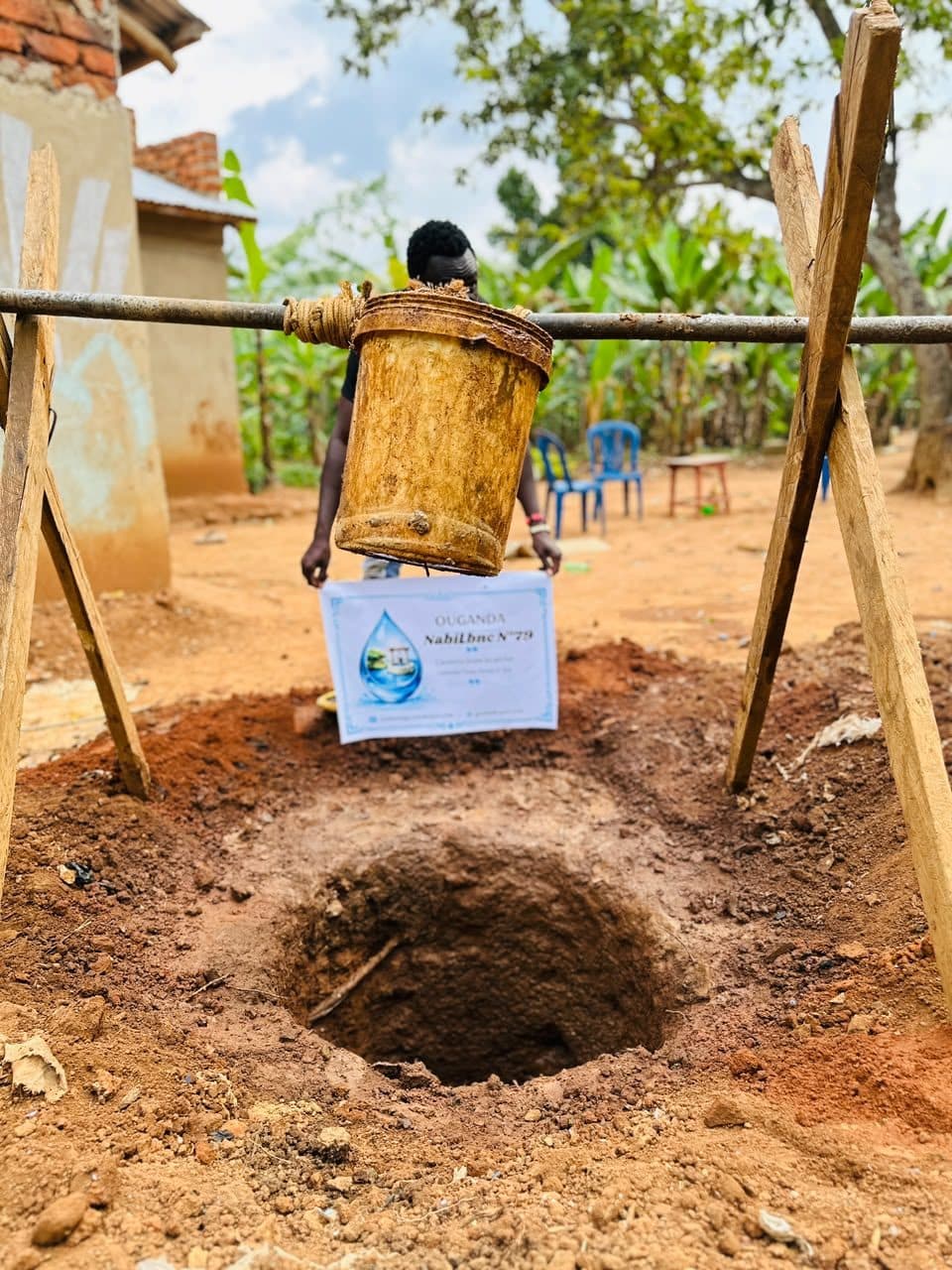
This is the stage that drives the cost. How deep the water table lies varies enormously from one region to another. The water that first comes up is heavy with soil; it clears as the borehole purges itself.
3. The slab and the channels
A concrete slab is poured around the casing and left to cure. It is extended by drainage channels that carry waste water away from the drawing point. Without them, the ground around the well turns to mud and the water is contaminated again.
4. The pump
The hand pump is mounted on its base and sealed. Choosing manual over electric is deliberate: no grid to connect to, no rare part to replace, no bill.
5. Commissioning
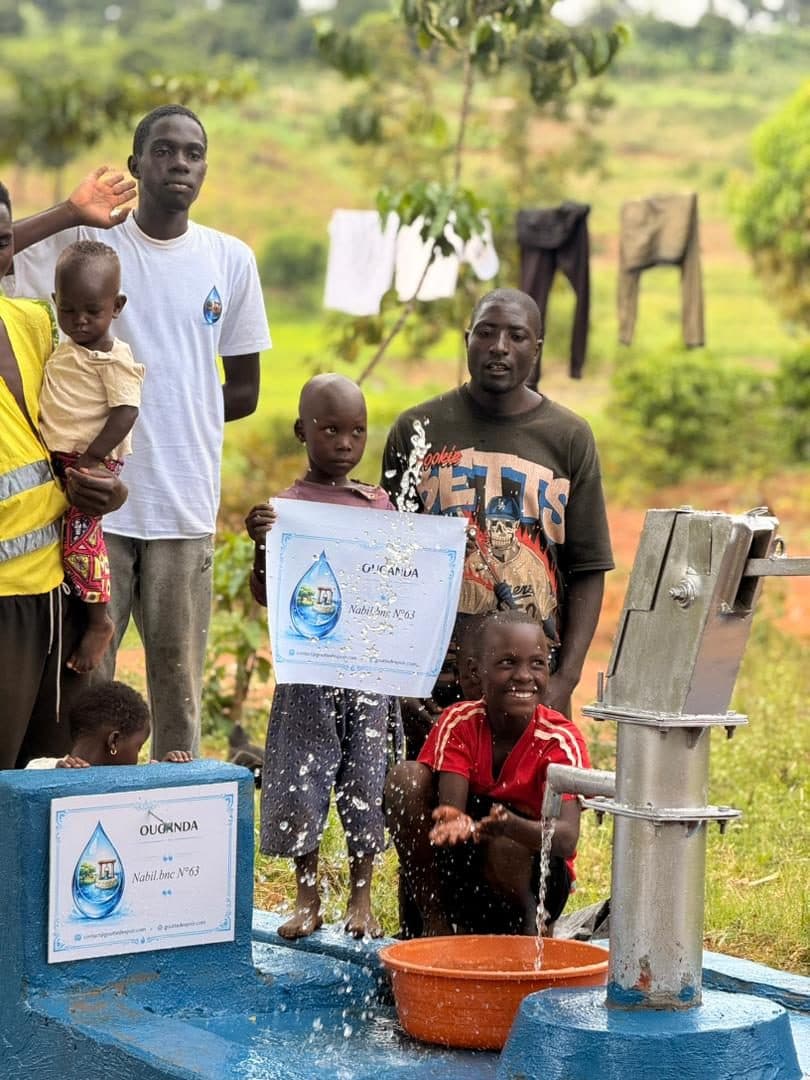
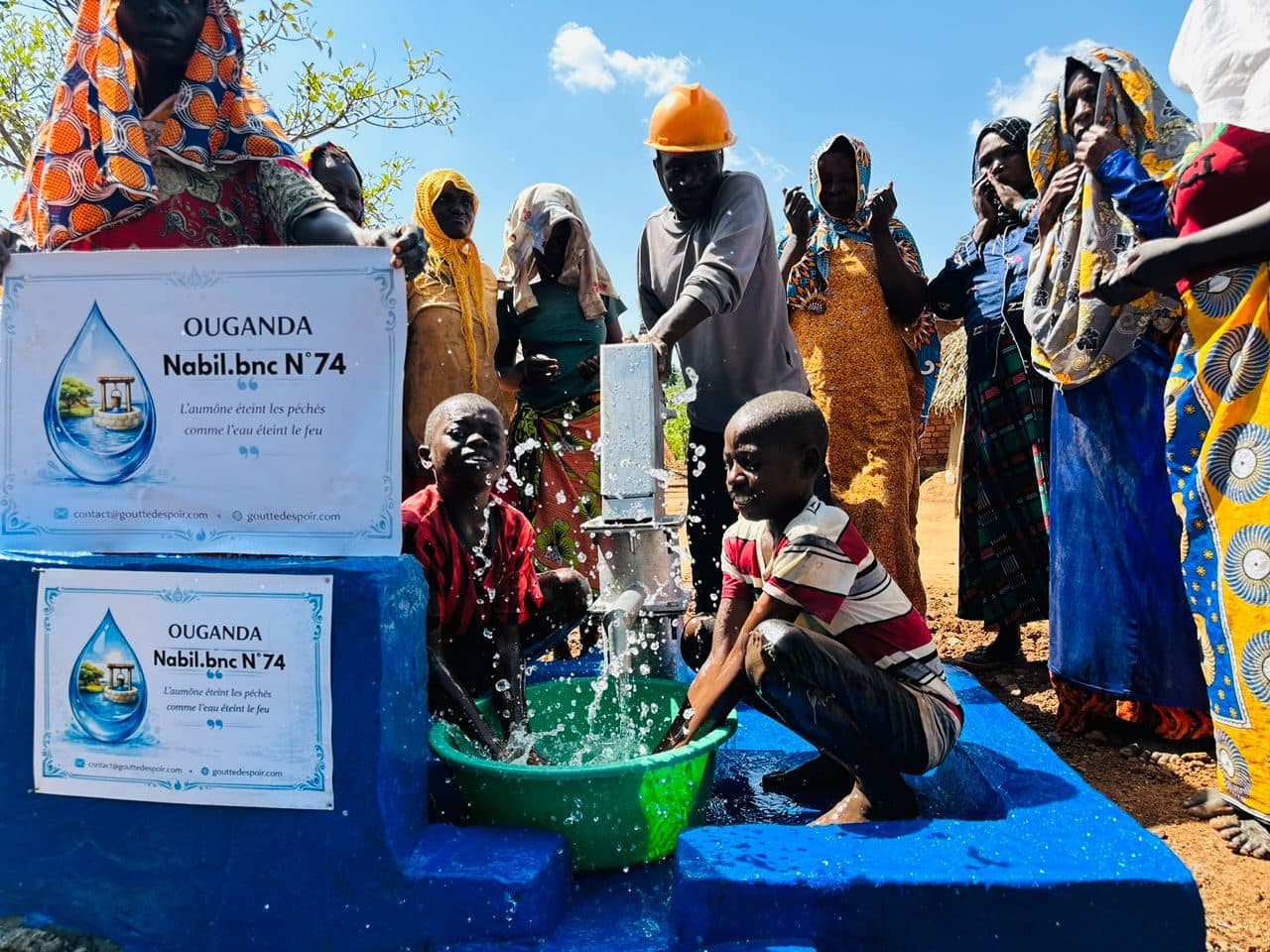
On the day of commissioning, the village gathers. That is also when the photographs are taken with the sign bearing the name chosen by the funder. The full set, before, during and after, then goes to the client.
Fund a well in the name of your choice
From €350 in Uganda, delivered with the photos and videos of the site. Stated timeframe: 3 to 5 weeks.