There is a category of good deeds that do not stop the moment they are performed. They keep bearing fruit, day after day, for as long as their effect lasts. This is what is called sadaqa jariya, literally the ongoing charity, the one that continues. In this article we detail the seven examples mentioned by tradition, and we will see why digging a well is one of them.
What is a sadaqa jariya?
A sadaqa jariya is a deed whose benefit renews itself over time. Where a one-off gift helps once, sadaqa jariya keeps serving for as long as the thing put in place remains useful. A water point that works for years, for example, gives water every day to those who come to draw from it. The best-known basis is a hadith that lists these deeds precisely.
There are seven things whose reward reaches the servant in his grave after his death: the one who taught a science, dug the bed of a river, dug a well, planted a palm tree, built a mosque, left a Quran as inheritance, or left a pious child who asks forgiveness for him after his death.
The seven deeds, one by one
1. Teaching useful knowledge
Whoever passes on beneficial knowledge keeps earning merit each time that knowledge is put into practice or passed on again. A teacher, a parent who teaches a child to read the Quran, a person who explains a useful rule: knowledge spreads far beyond the one who first shared it.
2. Digging the bed of a river
Making water available to an entire population, by digging a channel or shaping a watercourse, benefits everyone who depends on it to drink, cook and grow crops. It is a deed directly tied to the daily life of a community.
3. Digging a well
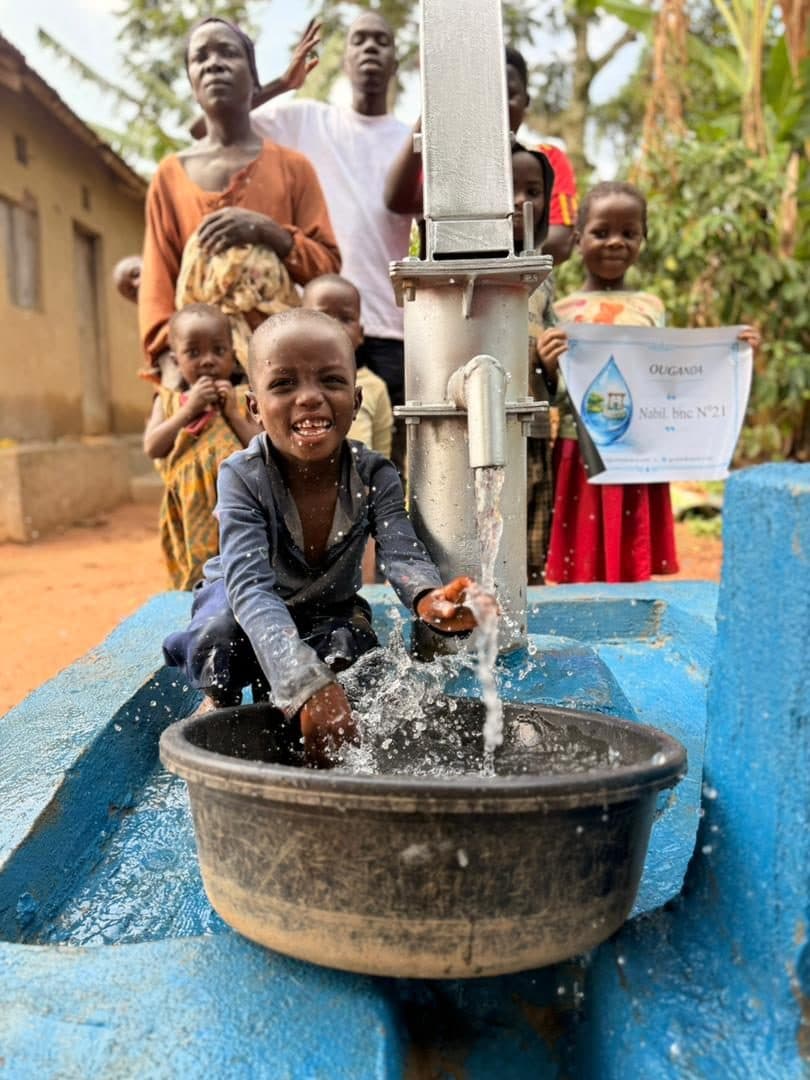
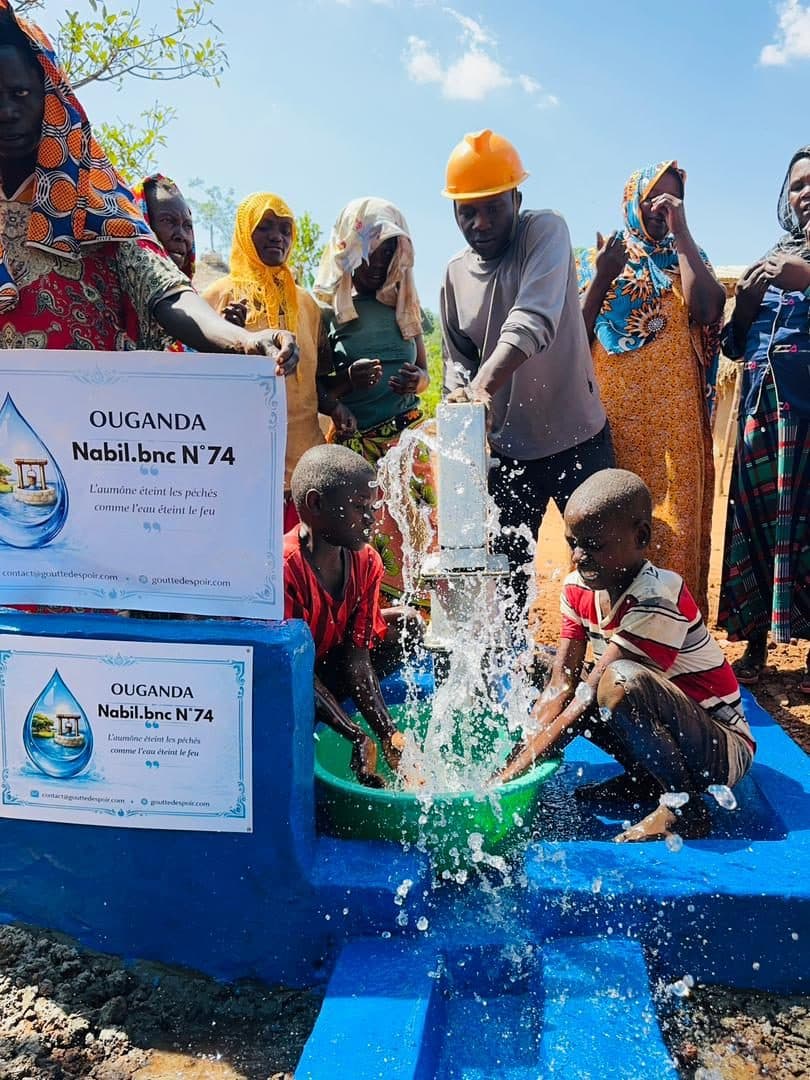
The well is perhaps the clearest example of sadaqa jariya. Once drilled and fitted with a pump, it provides drinking water every day, to dozens of people, sometimes many more. A well serves around 40 people daily, and up to 400 beneficiaries depending on the village's needs. As long as the water flows, the benefit renews itself.
4. Planting a fruit-bearing tree
Planting a palm tree, or more broadly a tree that bears fruit, feeds people and animals for years. Each harvest extends the merit of the one who planted it.
5. Building a place of prayer
Building a mosque gives a community a place to gather and pray. Each prayer performed there extends the benefit of the one who contributed to its construction.
6. Leaving a Quran as inheritance
Passing on a copy of the Quran, or funding its distribution, lets others read and study it long afterwards. The reading continues, and the merit with it.
7. Raising a pious child
A child raised in goodness, who prays for their parents after their passing, is a source of continuous benefit. It is the most intimate legacy: the one you leave through those you have loved and guided.
Why the well remains a concrete choice
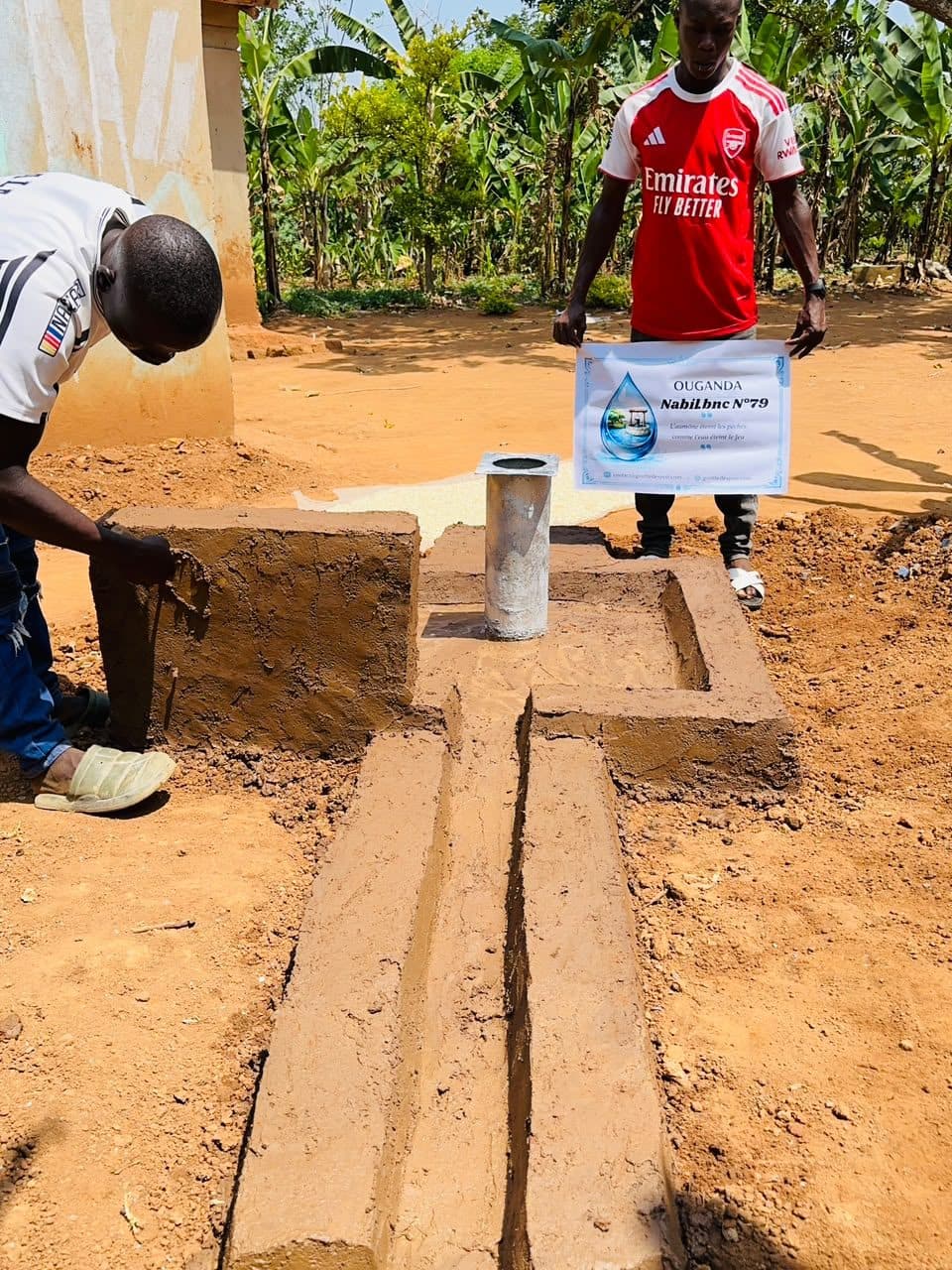
Many people are looking for a useful, tangible deed whose effect they can measure. The well meets that need: you know where it is built, you know who benefits, and you can see the result. At Goutte d'Espoir, every well is documented with photos and videos of the site at delivery, with a plaque bearing the name chosen by the client, or anonymous if they prefer.
If you wish to set your gesture in the long term, funding the construction of a well is a clear and verifiable option. You can explore our countries of operation and their prices, then choose to order a well whose progress you will follow through to commissioning.
Fund a well in the name of your choice
From €350 in Uganda, delivered with the photos and videos of the site. Stated timeframe: 3 to 5 weeks.