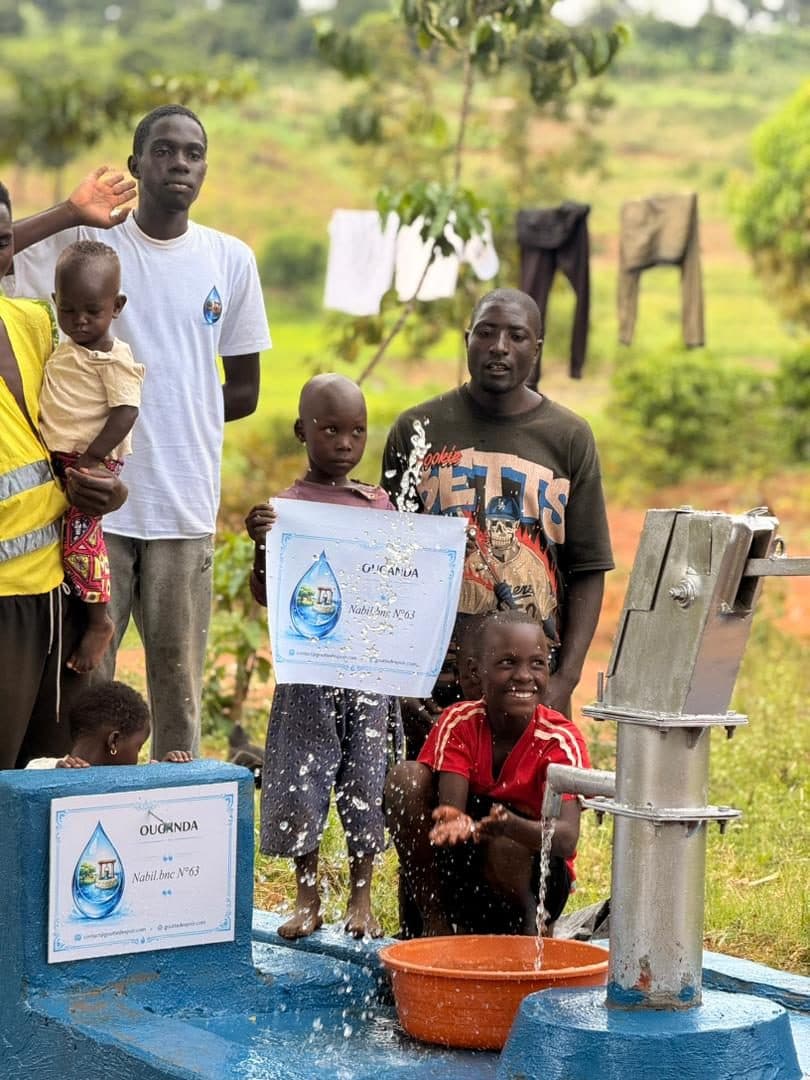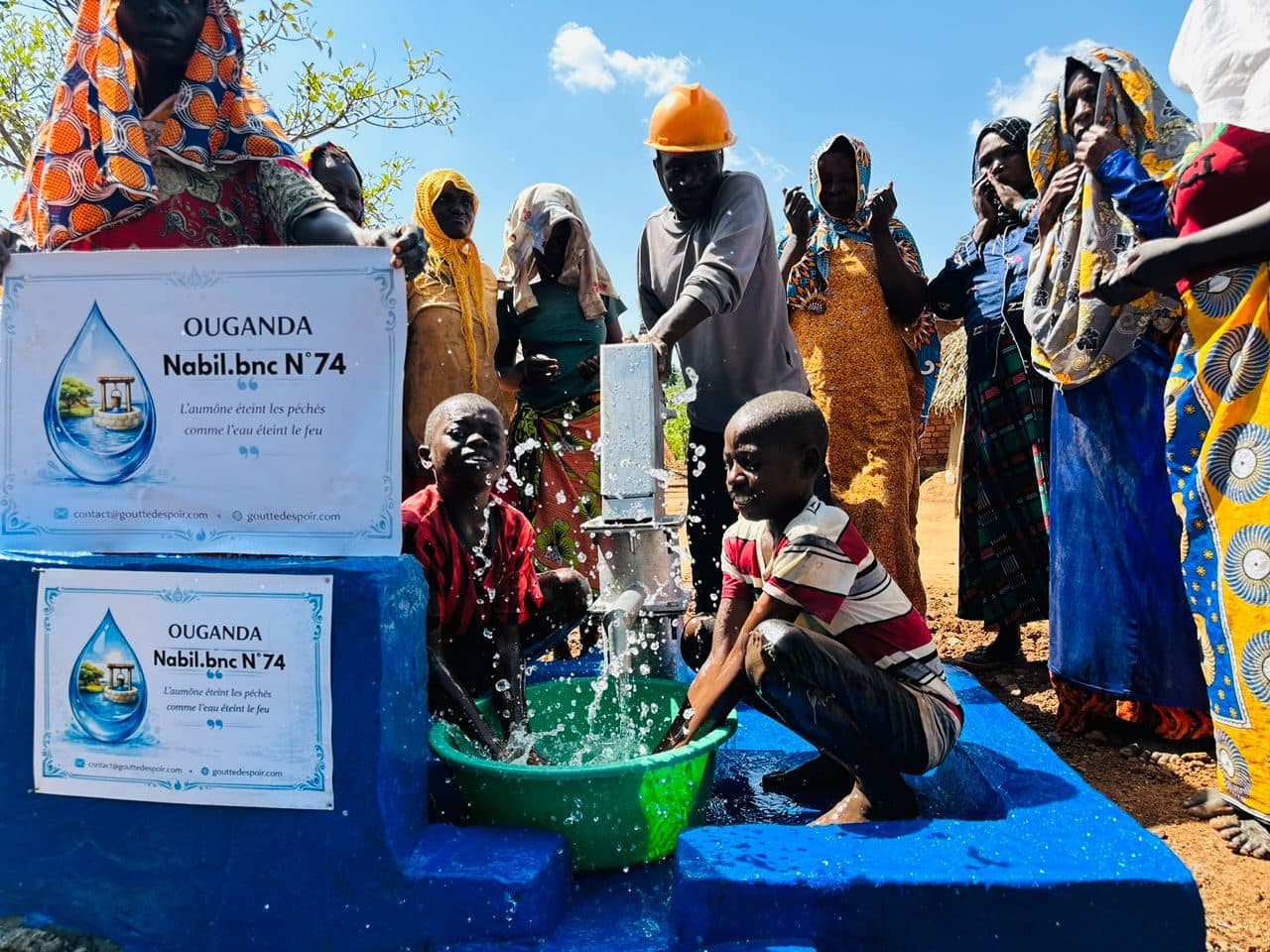
A well is designed to serve a whole community, with an average capacity of around 40 people day to day, rising to 400 beneficiaries depending on local needs and how dense the village is.
Why the range is so wide
Forty people corresponds to comfortable daily use, drinking, cooking and washing, for the nearest households. The higher figure corresponds to dense villages where the water point becomes a place people pass through from a far wider area, filling jerrycans for families several hundred metres away.
What changes day to day
- Time: the hours spent every day fetching and carrying water go to something else: school for the children, work for the adults.
- Physical load: carrying dozens of litres over several kilometres falls first on women and children.
- Water quality: water drawn from a protected borehole has nothing in common with surface water shared with animals.
And over time?
A hand pump sealed onto its slab needs no electricity, no subscription, no staff. That is the difference between one-off aid and a lasting deed: the well keeps working long after the payment that funded it.
Fund a well in the name of your choice
From €350 in Uganda, delivered with the photos and videos of the site. Stated timeframe: 3 to 5 weeks.